Monday, June 5, 2023

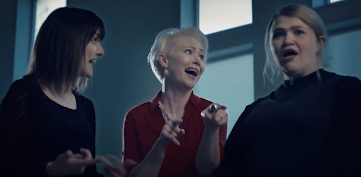
Nicol Insurance "Little Notes"


Click to watch.

Credits

Director/DP/Producer - Tom Church

Writer - Danny Cameron

Composer - J Scott Rakozy

Grip - Dylan Trahan

Production Assistant - Tannis

How much did production cost?

The full cost of the production (not including paying myself) was around $3000 CAD. Areas I was able to save were on locations, talent and crew. Everyone got paid but because they were all friends of mine they were happy to help out for minimal pay and excited for the project. I’ve since worked with much of this same crew again on several other projects. The majority of the cost was in the custom soundtrack composition and the voice over artist. I’m glad I invested in those areas because I feel that those 2 pieces specifically tie the whole commercial together. Other than that, I owned the camera package and lights and grip gear we used. That was also my car, house and ladder so we didn’t have to rent anything. 

Why this script/concept? How does it reflect your vision as a commercial director?

To be honest, I went through just about every script in the database trying to find a couple I could short list for my portfolio. There are alot of comedy focused scripts but I couldn’t find many that felt like something I would produce. At the same time a client had reached out asking me to submit a campaign proposal for an insurance company. I wasn’t overly interested in the project at first but then I stumbled onto this script and it stuck out because it felt complete. Almost like I had seen it before. It had a quality to it that made it feel like it would be at home on broadcast. There was also a strong emotional element woven in that I thought felt genuine and I thought the audience would appreciate. So technically not a spec project, I was lucky enough to get paid to produce this piece. As for how it reflects my vision as a commercial director, I’m not so sure. I was pretty inexperienced at the time and to produce the script seemed obtainable. It was pretty straightforward and wouldn't require a big crew or vfx. This was my first “real” commercial project of this caliber so I wanted something I could realistically accomplish on my own if needed yet still showcase a certain quality in the deliverable. Beyond that there wasn’t much vision to speak of. The script laid everything out really well.

What was the casting process like?

The casting process was similar to what I would expect for most lower budget productions. I put out a Facebook post to my friends and a few local swap and sell groups asking for actors. I included a short description of what the character would be doing and my anticipated demographics (ex/ mother, 30-45 years old) and asked the interested applicants to submit a short (1min) video of why they would be the right choice for the role. Within 24hrs I had around 10 submissions to review. A few friends reached out to me almost instantly which was nice but they were actually a really good fit for the roles so I locked them in. We actually shot 2 alternate scenes as well so that we could see how the final product felt with various demographics. Having more experience now I would still make a decision that best serves the brand first and save the expense of additional actors.

How did you search for/lock a location?

Honestly, I feel pretty silly here. I didn’t do much of a location scout at all. A buddy of mine who was going to be one of my grips for the day offered his Mom’s house as a potential location. I had been there before and thought it would work. We shot the first 2 scenes there, an indoor and an outdoor scene. For the final scene we really just needed a suburban home in a quiet neighborhood. I had originally lined up a location with a garage but the homeowner couldn’t get it cleaned in time for us and the light at the time of day we would be available to shoot was going to be much too harsh. So I ended up using my own house. I think it turned out fine but I did have a much more elaborate plan in mind originally.

How did you select your DP, crew?

Minus the retiree actor, everyone else involved were friends. I live in a pretty rural community (~20k people) so finding qualified crew has always been hard. My buddy Dylan and I have worked together for a few years on various projects and I knew I could trust him to set up a light and help review framing choices. His partner Tannis was a huge help on a short film we did where she was our Production Assistant so I hired her as well to fill the same role to make sure I didn’t miss anything.

How did shooting go? Any challenges?

The actual shoot was incredibly simple and only took about 4 hrs total. The only challenges were really just me getting out of my own way. Directing has always been the hardest part of the process for me as I gravitated towards the cinematography elements more so getting solid performances out of the talent was not my strong suit. Luckily everyone was really easy to work with and could take direction really well. This was also my first project using a RED camera so there was some anxiety around making sure everything was “ready for the camera”. I had tested everything out and knew how to operate everything but up to this point I was used to the look associated with DSLR cameras so I was a bit anxious to see how this would be different. Once I saw the image on the monitor I knew we were going to be fine. It just looked right, right away. Hard to describe exactly what it was but the character of the image was what I had envisioned. After that I relaxed and was able to really enjoy the process. 

Tell us about editing and finishing.

This was the easiest edit I’ve ever had. Seriously. I had a rough cut together that night and sent it off the composer right away. Scott was great to work with and had a custom soundtrack and a full mix to me within a day or two. I used Voices.com to help me find a professional voiceover artist and that process was incredibly efficient as well. Within 24hrs I had 20+ applicants to choose from, most of which were really good. Highly recommend both Scott Rakozy and Voices.com! Next time I would also bring in a colourist to take the lead instead of doing that portion myself just so there could be some more cohesion throughout the edit.

In retrospect, is there anything you would have done differently?

Absolutely. First thing is I would take more time in preproduction to do a proper location scout. These locations are fine and serve the story well enough but I think there are better locations we could have found that would have taken this to the next level. I still have a relationship with the client so hopefully we can turn this script into more of an ongoing campaign and focus on a wider demographic of actors and locations

Any other thoughts.

Like I said, this project was the first time I was able to really step out into commercial production and for that I’m really grateful. I learned alot about the process and have since implemented those lessons in the work I do today. I don’t have any formal video production training (I started out shooting weddings for friends and watching YouTube) so this was a big step in me understanding what I was capable of. I don't think the final product would be as good as it is without Danny’s script and without it being here on Spec Bank. Overall, I’m just really grateful that services like this exist for up and coming filmmakers. It definitely made a difference in my journey.

Monday, May 15, 2023

Red Oak Brewery "Body Language"


Click to watch.

Click to watch an interview with Eric Krehbiel and Dan Sorgen of Spec Bank.

Credits

Prod Co: Krehbiel Creative
Director: Eric Krehbiel
Writer: Dan Sorgen
Producer/1st AD: Joshua Collins
DP: Stephen Lemieux
Color: Kyle Messina
Gaffer: Sophia Williams
Key Grip: Carter Bailey
Sound Designer: Noah Kankanala
Sound Mixer/Boom Op: Jayden Santos
Production Designer: Jesse Malings
HMU & Wardrobe Supervisor: Amy Hendrix
Wardrobe Assistant: Ella Meisenheimer
1st AC: Caleb Williams
2nd AC: Erin Scannell
Art PA: Yuma Kobayashi
Set PA: Chandler Blancaflor
VFX AD: Erin Scannell
VFX Grip: Polly Ketcham
Photographer: Soren Olsen

Key Cast:

Briana Morell
Gideon Brown

How much did production cost?


We spent about $11,000 in total on this project. Almost everyone involved on the crew side took less than industry-standard rates since many were on the less experienced side and just looking for a portfolio piece or credits or the experience itself. As the director I worked for free, as did my DP, Stephen, which saved us a few thousand dollars. He also supplied Camera, Grip, and Lighting at no cost to the production, which saved us an additional several thousand. Without Stephen's eagerness to jump in and generosity with his time and equipment we could not afford to reach the level of quality we were aiming for. As a close friend with his own full-time gig working on video games, my sound designer, Noah, also jumped in for a very humble rate just to dip his toes into a different type of media. Our location also let us shoot for an entire 12-hour day for free, which went a long way for us financially. If everything had been priced at what it normally would be, it would have likely totaled about $40k.

Why this script/concept? How does it reflect your vision as a commercial director?


When I found the Body Language script, I thought it was a perfect fit for the type of project I was looking for. It centered around a great bit of emotional drama, which I figured would be a unique thing to display in a commercial while also sticking to the strengths of my niche of dramatic storytelling spots. I knew how I wanted to shoot it right away. 

What was the casting process like?


I knew if we were going to do a beer commercial, especially one with a romantic spark to it, we would need some real commercial talent. We talked with a few local talent agencies and looked at a handful of model/actors. I only considered people who had prior dramatic acting experience and looked at a lot of audition tapes they had done to gauge how each person performed on-camera. We eventually narrowed it down and made the call based on the assumption that Briana and Gideon would have decent natural chemistry.

How did you search for/lock a location?


We knew we wanted a bar that had something a bit dive-y and classic to it. We looked for places with a long bar and darker wood tones with an aged look throughout the space. After looking at several places, we settled on The Wooden Nickel Pub which Josh, our Producer, had a relationship with. They were incredibly accommodating to our production; we couldn't have dreamed of a better location to work with. 


How did you select your DP, crew?


Stephen was the first person I approached about the project. We had worked in Camera Dept together on a short film a few months before and I enjoyed his energy on set. He had told me he was looking for opportunities to build his portfolio as a DP, so I mentioned I was going to be making 2 spec spots and would he want to jump in. He was eager to get the chance and offered to work and supply a generous amount of gear for free (which he already owned). I realized quickly in planning that I would need help pulling all the elements together and brought in Josh, my Producer and 1st AD, to help with logistics in order to let me focus more on the creative. The rest of the crew came together over the course of a few weeks through my personal network of crew people.

How did shooting go? Any challenges?


This was probably the smoothest shoot I have directed thus far. There were a lot of variables and a last-minute scheduling change that created quite a bit of stress leading up to the day, but once we got on set and started setting up everything clicked into place. Josh did a great job of giving direction to our 14+ extras between takes while I was able to only worry about Briana, Gideon, and the frame. We only had 4 lighting set ups all day, so we had a decent amount of space in the schedule to really work on the performances and get our angles and everything exact to what had been storyboarded.  

Tell us about editing and finishing.


The cutting process was a bit tricky. There were several incredible shots that we had that ended up on the cutting room floor. Initially in the storyboards we cut out to the two shot a few more times, which had a nice rhythm in the sequence, and we had a little more back and forth between the characters before Gideon walks off to get the beers. We tried to do a 30 second cut that kept all these elements, but the cutting became far too rapid to allow for any real feeling to develop with how the guy and girl were interacting. It was too chaotic, so we had to reduce our shots significantly to create more space between each cut. I think we ended up finding the right balance to have enough going on for the scene to be interesting, while also slowing it down enough to get a sense of the chemistry between Briana and Gideon, which was important to making the scene connect with the viewer. 

In retrospect, is there anything you would have done differently?


Carrying off what I said on the editing, I think we had too complex of a sequence in the storyboarding phase. Since I hadn't had to deal with a 30 second runtime before, I wasn't aware of how much a cut impacts the feeling of the scene you're covering. Since the dramatic tempo of this spot was meant to be a bit slower and focused on this romantic angle, we really would have found a perfect balance at around 13-15 shots. We had storyboarded 21 and ended up at 17 in the final edit. It might have been a good idea to use 2 cameras to shoot coverage a bit differently than how we did it here. The process we used was very much shooting a certain moment here and a certain interaction there, in a very broken up manor, so that in the final sequence the framing of each shot would change as the two leads warmed up to each other more. I think visually what we have is very effective, but it would have been nice to also get performances that were a little richer and more spontaneous. 

Any other thoughts.


I'm very grateful to everyone involved in this project and especially to Red Oak for taking an interest in the product of all our efforts. This was by far the most enjoyable shooting experience I've had so I can only say that I really loved getting to make it. Many thanks to Dan and Spec Bank as well for being such a great resource from the start of the project. 


Gatorade "Blindfolded"


Click to watch. 

Credits


Prod Co: Krehbiel Creative
Director: Eric Krehbiel
Writer: Dan Sorgen

Producer/1st AD: Joshua Collins
DP: Stephen Lemieux
Color: Kyle Messina
Gaffer: Sophia Williams
Key Grip: Carter Bailey
Sound Designer: Noah Kankanala
Sound Mixer/Boom Op: Jayden Santos
Production Designer: Jesse Malings
HMU & Wardrobe Supervisor: Amy Hendrix
Editor: Joshua Collins, Eric Krehbiel
1st AC: Caleb Williams
2nd AC: Erin Scannell
Art PA: Yuma Kobayashi
Set PA: Chandler Blancaflor
VFX AD: Erin Scannell
VFX Grip: Polly Ketcham
Photographer: Soren Olsen

Cast:


Sky Rebeor
Dries Raets
Tyler Gene
Amir Bradsher
Caleb Barreto


How much did production cost?


We spent about $12,000 in total on this project. Everyone involved on the crew side took less than industry-standard rates since many were on the less experienced side and just looking for a portfolio piece or credits or the experience itself. As the director I worked for free, as did my DP, Stephen, which saved us a few thousand dollars. He also supplied Camera, Grip, and Lighting at no cost to the production, which saved us an additional several thousand. Without Stephen's eagerness to jump in and generosity with his time and equipment we could not afford to reach the level of quality we were aiming for. As a close friend with his own full-time gig working on video games, my sound designer, Noah, also jumped in for a very humble rate just to dip his toes into a different type of media. If everything had been priced at what it normally would be in the commercial market, this spot probably would have cost about $35k to pull off.

Why this script/concept? How does it reflect your vision as a commercial director?


I chose the Blindfolded script because I thought it was well suited for the type of commercials I want to be working on. It had a clear, focused narrative element with the main character competing against a group of antagonists. The scene had a simple set up, dramatic stakes, and a lot of room to play in terms of how it could be captured. It was also a single-location commercial, which made it more feasible with our limited resources. I was specifically looking for a non-comedy storytelling script that allowed for two things: 1) plenty of working with actors (so no tabletop/food/etc.) and 2) a dynamic sequence of shots.

What was the casting process like?

It took some time to simply find people who would be available for 10-12 hours overnight on a Saturday. I knew we wanted actual basketball players since we wanted them to be able to bring a dose of realism to the movements they would perform. We thought we had some players from a college basketball team locked in until a scheduling conflict cropped up about a week before production. Luckily, we were able to find a new cast of actual players quickly through word of mouth within a few days and proceeded as planned. It was a lot of reaching out to friends and online casting calls.

How did you search for/lock a location?


Originally, I intended for this spot to be shot on an outdoor court at night in order to get a deep level of contrast with background falling into blacks. Unfortunately, we were locked into shooting in January, which made overnight temperatures too cold to put a team through for a full shoot day, so we decided to look for an indoor court instead. We were able to find a community rec center close to most crew members that closed for 12 hours overnight on Saturdays. We rented it out at a slightly discounted rate for the full 12 hours and ended up wrapping out with 1 hour to spare. 

How did you select your DP, crew?


Stephen was the first person I approached about the project. We had worked in Camera Dept together on a short film a few months before and I enjoyed his energy on set. He had told me he was looking for opportunities to build his portfolio as a DP, so I mentioned I was going to be making 2 spec spots and would he want to jump in. He was eager to get the chance and offered to work and supply a generous amount of gear for free (which he already owned). I figured that would be a win-win arrangement and we both ended up being very proud of the work we did together. I realized quickly into planning that I would need help pulling all the elements together and brought in Josh, my Producer and 1st AD, to help with logistics in order to let me focus more on the creative. The rest of the crew came together over the course of a few weeks through my personal network of local crew.

How did shooting go? Any challenges?


Shooting was quite smooth. We had done extensive prep with detailed storyboards beforehand and all dept heads knew exactly what we were trying to capture days in advance. There was a hard stop at 12 hours which caused us a bit of stress going into the shoot. We had to shuffle our shot list and change one section of the sequence early on to ensure we didn't lose time, but since we were in one room for the entire shoot it was a minor set of changes.

Tell us about editing and finishing.


Editing was a challenging process for me as a director. Facing the time constraint of packing the entire story into 30 seconds, with time left over for a logo card, was something I hadn't dealt with before and I'm glad to have been forced to figure it out. You start to understand which frames are really communicating something worthwhile when you must condense down to that level. In storyboarding, we added an entire angle with a plot-twist where the 4 villains disappear, and it was all in the protagonist's mind. The rough cut where we tried to keep this felt cluttered, and in being economical we had apparently made the ending confusing, per feedback from other creatives. For the final cut I decided to cut out that angle entirely and let the editing focus more on emphasizing movement and action, which I think ended up being a much more powerful use of a 30 second runtime. Finding the soundscape mostly revolved around balancing the deeper layers of texture and foley with a top layer of music. We knew once we locked the cut that the audio was going to be what carried the energy of the scene. The mix we ended up with was something that had to be fine-tuned to be able to carry narrative momentum all on its own. 


In retrospect, is there anything you would have done differently?


I wish I had built the sequence with a smaller number of shots when we were storyboarding. We captured 31 shots on set and ended up using about 26. Even in the final cut I felt the editing was a bit cluttered, so if I were to do another 30 second spot in this style, I would aim for a shot count closer to 23 or so. I did not appreciate the impact of a cut within such a short window.

Any other thoughts.


I'd like to say that Spec Bank was a super valuable resource for the project. Without this caliber of a script to work off, there is no way the project would have been what it is. That sort of embodies the whole approach to getting this spot made. We had to take advantage of a lot of resources that were readily available and turn them around into the highest quality product possible. I'm continually impressed with what each department was able to pull off to get what we have with the finished cut.


Crest "Smiles for a Lifetime"


Click to watch.

Credits:

Director: Eli Meir Kaplan
Writer: Josh Weinstein
DP: Tyler Davis
Producer: Eli Meir Kaplan
Gaffer: Taylor Roesch
Sound Operator: Mike Schoen
Hair/Makeup Stylist: Kim Reyes
Wardrobe Stylist: Alyssa Sadler
Talent: Linda Townsend MGMT
Editor: Eli Meir Kaplan
Colorist: Faction
PA: Elon Durant

Cost to produce the spot? 

It cost around $5,000 to produce the spot

Why this script/concept? How does it reflect your vision as a commercial director?

I specialize in emotionally compelling storytelling. I searched through most of the scripts and found a few that I resonated with. Of those, Crest "Smiles For A Lifetime" was the most economically feasible (small cast, one affordable location)

What was the casting process like?

I cast most of the talent through Backstage. The adult version of the child was difficult because I wanted to use a real family that had a daughter. Linda Townsend MGMT helped me find a family for that particular role.

How did you search for/lock a location?

I used Airbnb. I was looking for a house that had two distinct bathrooms that didn't look modern.

How did you select your DP, crew?

I'm a commercial photographer and often hire most of the people who were on the crew. There were a few people who I hadn't worked with--such as the wardrobe stylist. I always make a point of hiring people who are able to help on spec projects. I had worked on the DP on a short film--his work is phenomenal. I was lucky that he was willing to collaborate on this.

How did shooting go? Any challenges?

Everything went relatively smoothly. We took a little long with the first scene and had to move more quickly for the rest--we ended up cutting out a shot. There was also a mixup with the Airbnb and renters entered the house toward the end of our shoot. I asked them to stay in the basement. That kind of threw me off. Parking was also an issue.

Tell us about editing and finishing.

I edited the project in Final Cut Pro. The original cut was around :60 and I wanted to cut it down to :30. I found the best way is to delete and shorten shots from the at :60 edit rather than try to fit everything into :30 from the beginning. Faction handled the color grading. I worked with a motion graphics designer from Upwork on the Crest logo at the end. He nailed it.

In retrospect, is there anything you would have done differently?

Yes, I think I tried too hard to hit emotional notes. It seems to work better when I don't try to turn on the waterworks and it just unfolds organically.

Any other thoughts.

It takes a lot of effort to put spec shoots together, but it's SO worth it. There's nothing like creating a compelling story from scratch.

Monday, April 17, 2023

Draft Kings "Getaway Driver"


Click to watch.


Credits: 

Producers: Daniel Kontur, Zita Kisgergely, Szabolcs Moradi
DOP: Zoltan Devenyi
Music: Luke Richards
Sound Design & Mix: Balazs Pejko
Editor: Daniel Kontur
VFX: Pedro Brehm, Kornel Sevinger

Cost:

$5,000

Why this script/concept? How does it reflect your vision as a commercial director?

I have a huge passion for Michael Mann-like urban thrillers / crime films and this script gave us the opportunity to make something along the visual and tonal landscape of that genre. 

What was the casting process like?

We worked with a local agency here in Budapest who sent us headshots of various local talent from which we picked out suitable candidates. 

How did you search for/lock a location?

We were looking for urban yet modern buildings that resemble modern banks. The tricky part was to find a privately owned car park right in front of the suitable building that we could all rent out in one go. 

How did you select your DP, crew?

We worked with the usual suspects that we’ve worked with on Burger King

How did shooting go? Any challenges?

The biggest challenge was that it was a night shoot in late November and it was bloody freezing. Also we were behind on schedule and had to pay overtime to crew members which made the budget go up. 

Tell us about editing and finishing.

I edited the film myself like most of my projects. 


Sunday, March 26, 2023

Uber Eats "Art of Dinner"


Click to watch. 


Credits:

Directed by FRICK & FRACK (Joe Laporte & David Liehn)
Edited by FRICK & FRACK (Joe Laporte & David Liehn)
Written by Dan Sorgen
DP – Evan Butka
Producer – Myke Scott
Production Designer – Resa Cole
Sound Design – Kevin Dippold
Wardrobe – Mark Katigbak
Makeup – Zdra Jaye

Cost: 

$12,000. 

And that was with A LOT of favors. Many crew members working for free, and Joe and I doing a fair amount of the post work on our own to save money.

Why this script/concept? How does it reflect your vision as a commercial director?

We chose the script because we were looking for a fun comedy spot to direct and add to our “reel.” We thought the spot would be visually humorous and have a good pay off at the end. It was also a spot we could shoot without financially breaking the bank but still get a lot of commercial value out of it. It was also a good fit for us as a directing team because we usually divvy up the onset duties between the two of us. While one of us was focusing on the kitchen and production design, the other one was figuring out camera placements and dealing with the actors.

Casting:

We did our casting virtually (due to Covid) and found all of our talent on LA Casting. We had specific written descriptions for each role. After the initial round of submissions, we narrowed it down to a few actors for each role. We then gave each actor further direction and more specifics as to their character and had them re-tape themselves. From this second round of interviews we were able to finalize our cast.

How did you search for/lock a location?

We were originally hoping to build a kitchen set on a stage, but that ended up being too costly for our budget. Then we turned our focus to finding a house with a suitable kitchen and performed our search on a couple of online sites. In the end I believe we found this house on Peerspace. We scouted 4-5 different locations with our DP and Production Designer - all with different styles of kitchens. We settled on this house in Long Beach due to a few different factors. It had a wide-open kitchen floorplan which we liked. This gave us a lot of room to move the camera around and achieve different angles to shoot from. The kitchen was also not too upscale which was age appropriate for the characters in the spot. We also needed a kitchen with light colored cabinets to help make the pasta sauce “splatter” really stand out and “pop” visually.

How did you select your DP, crew?

We have been working with the same DP for a while now. We have a good working relationship and value his input as far as camera position and lensing, etc. His camera and G&E crew move fast and efficiently while delivering great looking footage. Our sound designer, as well as our Make-up and Wardrobe stylist are collaborators we have used in the past and value their expertise. Our production designer was new to our team but someone whom we had met working on a different set. Her and her team were great to work with and we would be happy to work with them again in the future.

How did shooting go? Any challenges?

I think every shoot and every set has its fair share of challenges. Our biggest challenge on this day was that we shot two separate spots in and around the same location. This kitchen spot was our main spot. Most of the focus was on getting this one in the can before moving onto the next spot.

Our biggest challenge in this spot was making the kitchen disaster look realistic. We were very happy with the way the pasta sauce look when splattered on the cabinets. Unfortunately, at the end of the day, we realized that no amount of cleaning and scrubbing would get the red stains of the pasta sauce off the white cabinets. Let’s just say that was an expensive lesson to be learned…

Tell us about editing and finishing.

Editing sound design and coloring on this project in particular took longer than usual. We worked with a couple of different editors but ended up finishing the edit ourselves. We just couldn’t seem to get the comedic timing right when we outsourced the editing to someone else. Once we finally had the picture locked, we moved on to sound design. The biggest challenge there was just getting the sound levels correct between the splattering of the pasta sauce and the doorbell ringing, etc. We also had a few different music scores composed and ended up picking the one that is used in the final edit. 

Finally, we moved onto coloring which was the final piece of the puzzle. We ended up using a new colorist this time around who we were referred to. In the end we were very pleased with the final version, but it took a lot of back-and-forth to get there. Our colorist did not speak good English, so I think a lot of our original notes were lost in translation. The trickiest part was getting the pasta sauce to look the correct shade of red when splattered on the white kitchen cabinets. But when he finally got it correct, we were very happy with the outcome.

In retrospect, is there anything you would have done differently?

I’m not sure that there’s anything in particular we would’ve done differently. I think it’s always helpful to have more time and be able to shoot more footage and have more coverage available in the editing room. I think we also may have been able to troubleshoot the pasta sauce stains left on the kitchen cabinets. I’m not sure what else we could have done to achieve that effect, but figuring out a workaround to avoiding buying new cabinets would have been a smart move.

Monday, May 30, 2022

Ted Baker "At Your Worst" and Pringles "3 Second Rule"


Click to watch Pringles 


Click to watch Ted Baker 

Credits

Ted Baker:

Writer - Brian Engleman
Cast: Kenna Roubicek, Talitha Hanks, Naomi Winders
Director: Kade Atwood
1st AD: Garet Allen
DP: Sam Sargeant
Production Designer: Cassie Powell
Script Supervisor: Lucie Riddell
Gaffer: Robert Chuck
Key Grip: Josh Miller
Best Boy: Steve Butler
Grip: Zhiyang Tsai
1st AC: Ryan Nordgran
Audio Mixer: Ike Flitcraft
Colorist: Keyhan Bayegan

Pringles:

Writer: Dan Sorgen
Cast: Arvin Mitchell, Megan Rico
Director: Kade Atwood
DP: Josh Miller
Gaffer: Zhiyang Tsai
Key Grip: Vincent Pelina
Production Designer: Megan Rico

Why this script/concept? How does it reflect your vision as a commercial director?

I like to find comedy in unexpected places. A lot of spots today go for the obvious or safe option. These scripts stood out to me because they’re not a “typical” ad. Who would think to make a Pringles spot in an operating room or a fashion brand at a funeral? For me, those are the types of ads I remember because they do the unexpected. 

What was the casting process like?

Most of the cast I already work with on a sketch comedy show, Studio C. Kenna and Talitha were recommended by the other cast members. Casting is such a crucial piece and I was lucky to have access to an extremely talented pool of comedians. They brought so much life to the roles and a lot of what you see was improvised. 

How did you search for/lock a location?

Google maps! I wasn’t too picky on what they needed to look like because we did a lot of set dec. Rigging the 40 feet of sheers in the background of the funeral spot occupied the entire crew for almost an hour. It ate up a lot of our schedule but looking at the shot, it was totally worth it. It’s amazing how a little set dec can transform an otherwise empty space. 

How did you select your DP, crew?

These are people I’ve been working with for a very long time. Sam gave me my first ever role on a film set back in college and now he’s my go to DP. I’m picky when it comes to finding collaborators. My crew isn’t just talented at their job. They’re my close friends who I can spend all day with… because I am in fact spending all day with them! Their positive attitudes mean everything to the production, it’s the foundation of a successful spot. 

How did shooting go? Any challenges?

The Funeral was one of three spots we shot in two days. It was difficult to keep track of everything at times. But our prep work was very thorough and I’m happy to say we made our days! 

Pringles was a standalone shoot, making it much easier to coordinate. My main concern was the schedule. We had the actors for a very short time frame without a minute to spare. A couple problems came up along the way but we were able to make up time later and finish on schedule! 

Tell us about editing and finishing.

Editing took a while. Not because of the cuts but because of the tag. The Funeral spot was originally an ad for shoes. On set we found out the bottom part of the coffin didn’t open, killing the original branding. I thought the spot was ruined because it didn’t tie into a specific product. Luckily that’s when we learned about X4Y and realized the general branding increased the amount of companies the spot could be purchased by.

In retrospect, is there anything you would have done differently?

In the Funeral, there’s a cut from a medium wide to a medium. We couldn’t adjust the angle as much as I would hav liked so it feels like a jump cut. The solution was to have an extra cross frame to cover the cut. But we only had one extra and she was part of the beginning, to help us get into the scene. In post we cut that beginning segment and I should have changed her blocking on set.

Any other thoughts.

It’s great that Spec Bank has created a place for directors and copywriters to create work that would otherwise remain on a page. It’s equally exciting to see the emergence of X4Y and be able to produce spec work with a greater chance of selling it. 

There remains a huge barrier of entry to the commercial production industry. I’ve been fortunate enough to have jobs that allow me the time and financial stability to create spec work. I imagine for every director like myself there are many others that don’t have that privilege. The ability to direct is not correlated to the amount of money you have in your bank account. I hope to see agencies and production companies begin to form programs that allow unestablished, underprivileged director’s the opportunity to demonstrate their abilities.